Who I am
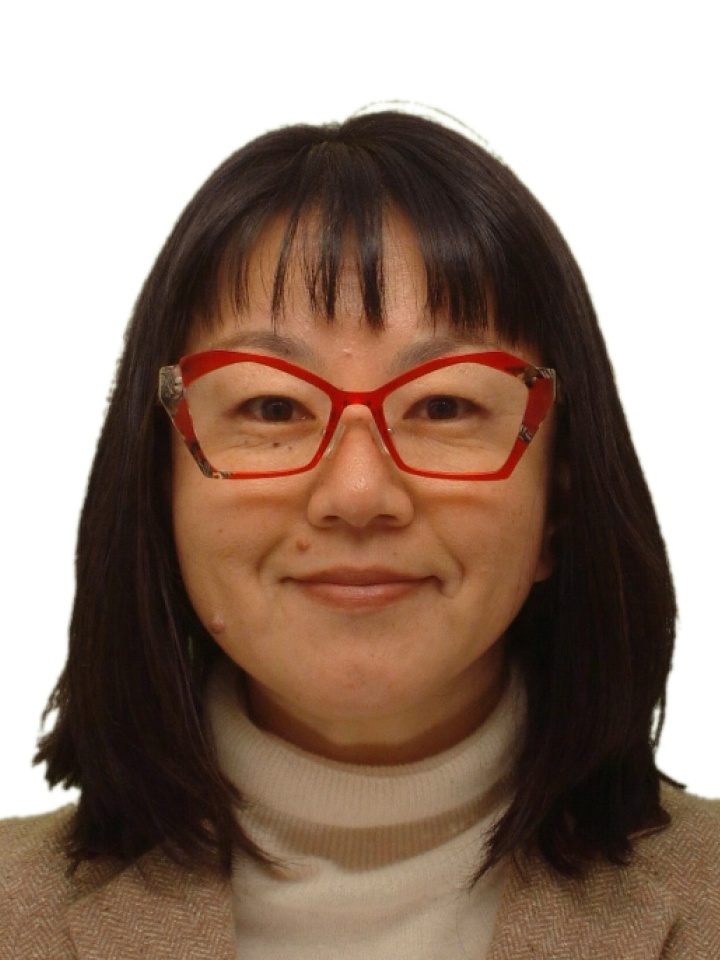
My name is Yuka Hasegawa. I am a cultural anthropologist, translator, and the creator of Metabolic Sociology — a framework for understanding how human beings grow, change, and become agents capable of mediating change and, in doing so, lead the ongoing change from its midst.
At the center of my work is a Japanese concept: shutai (主体). Often translated as "subject" or "agency," shutai is richer than either word suggests. It describes the active, embodied process by which a person becomes a genuine participant in shaping their own life, their culture, and the world around them. I did not just study shutai — I set out to live it.
I bridge Japanese and Western intellectual traditions as a translator and interpreter of Japanese social theory — bringing ideas to life across languages and cultures, rather than letting them vanish in translation.
My Journey to Shutai
I grew up moving between Japan and the United States. My father worked for a Japanese electronics firm; while my mother — an educator — wanted her children to be bilingual. My weekdays were spent at an American public school; my Saturdays at a Japanese supplementary school. From an early age, I was moving between two worlds, and I became fascinated by how culture shapes — and is shaped by — the choices people make.
In college, I discovered Cultural Anthropology and wondered whether it could help me make sense of experiences I had never quite been able to articulate: the sense of not fully belonging in either world, of navigating unstated rules, of watching the same human problems appear in different costumes across cultures. Graduate school gave me the social science tools to name what I had felt — and to begin asking better questions.
When I entered the world after my PhD, I found that one word kept appearing everywhere. Teachers, corporate leaders, politicians — all of them spoke about the urgent need for people to become shutai, as if it were the key to solving every social problem Japan faced. But no one could define it clearly. The word was everywhere; its meaning was nowhere.
That gap became my driving force. If shutai is so central to how we think about human growth and change, I needed to understand it not as a concept to apply, but as a lived practice. This question led me to create Metabolic Sociology: a framework for exploring how we become active, mediating agents of change through concrete, embodied engagement with the world.
What is Metabolic Sociology?
Metabolism, in biology, is the process by which a living organism transforms what it takes in from its environment into energy, growth, and action. Metabolic Sociology applies this logic to culture and society: we are not passive recipients of the world we are born into. We absorb, transform, and contribute — we become shutai — through our daily, embodied relationships with nature, community, and practice.
In Japan, there is a phrase: karada ga shihon (体が資本) — "my body is my capital." It reflects the understanding that physical activity, human connection, exercise, and embodied skill are the foundation on which all other forms of capital rest. No amount of social or economic capital can replace health and embodied knowledge — and no AI can replicate them. This insight runs through everything I do.
Metabolic Sociology draws together cultural anthropology, social theory, ecological thinking, and the philosophy of shutai to offer a practical, grounded approach to living and learning in a rapidly changing world.
Why This Framework Matters
Invisible Hand of Policy
Anthropologists often discuss the nature-culture divide — but rarely examine how policy quietly shapes both. Japan was occupied by Allied Forces from 1945 to 1952, and the postwar economic boom that followed was deeply influenced by occupation policies. Those policies gave rise to cultural narratives — "Japanese collectivism vs. American individualism," "Japanese homogeneity vs. American diversity" — that were not organic truths but constructed outcomes. Policy shapes culture, and culture shapes the people we become. Understanding this is essential to understanding shutai: we cannot become genuine agents of our own lives without first seeing the invisible structures that shape us.
Nature's Copernican Turn
There is growing recognition that prioritizing economic growth above all else is unsustainable. Initiatives like Gross Domestic Happiness, the Millennium Ecosystem Assessment's concept of ecosystem services, and the System of Environmental Economic Accounting (SEEA EN) all represent steps toward a more integrated picture — one where nature, culture, and human well-being are understood as inseparable.
As a graduate student, I taught Japanese pop culture simply because it was part of my curriculum. But I could not ignore the fact that the course often functioned as an entertainment-driven, credit-earning mechanism rather than a meaningful educational experience. When knowledge becomes a commodity and education becomes a transaction, we lose something essential. I became convinced that institutions — educational and otherwise — must resist the reduction of human growth to economic exchange.
Becoming, Not Vanishing
Eminent scholars — from Fredric Jameson to Alain Badiou to Slavoj Žižek — have used the term "vanishing mediator" to describe the transience of the concepts and individuals who carry ideas between worlds. Vanishing is what European intellectuals tend to theorize about when they look at shutai. I take a different view. As a translator and interpreter, I am a mediator — but I insist on becoming, not vanishing. My practice is to make the antagonisms visible, to place myself in relation to them, and to work through them rather than dissolve into them. This is what Metabolic Sociology asks of all of us: not to be swept away by history, but to metabolize it — and in doing so, to grow.
An Invitation
Here is what I have come to believe, after years of living between languages, between cultures, and between theory and practice.
Most frameworks for social change ask: what needs to change in the world? Metabolic Sociology asks something prior: who do I need to become in order to be part of that change? This is not a retreat from the political. It is the recognition that transformation without a transformed self is unsustainable — that movements stall, policies fail, and institutions calcify precisely because the people within them have not yet become shutai in their own lives.
What makes my position unusual is that I came to this insight from two directions simultaneously. As a bilingual scholar trained in both Japanese cultural practice and Western critical theory, I have spent my career watching ideas travel across languages — and watching what they lose in transit. The concept of shutai has no clean equivalent in English. "Subject," "agent," "self" — all fall short. That gap is not merely a translation problem. It is a sign that Japanese thought holds something the Western tradition has not yet fully named: an understanding of selfhood as fundamentally relational, embodied, and ecological. My work is to make that understanding accessible — not by simplifying it, but by living it openly and sharing what I find.
This site is the record of that ongoing practice. It is not a finished system or a self-help manual. It is spiral — a form that returns to the same questions from ever-deepening angles, picking up new layers of meaning with each turn. The questions I am circling are ones I believe many people feel but rarely find language for: How do I live in a way that is genuinely mine? How do I act with integrity inside systems that resist it? How do I stay rooted in my body and community while engaging honestly with a world in crisis?
If those questions resonate with you — whether you are a student, a practitioner, an educator, a researcher, or simply someone navigating an uncertain world — then this work is for you. You do not need to be an expert to begin. You only need to be willing to become.